What an interior drain can collect. How to check its route through your basement. What to settle before you open the floor.
Start with where the water enters
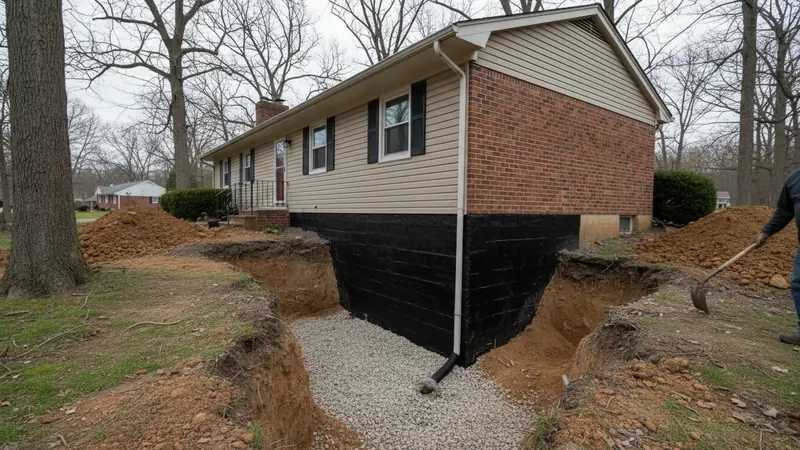
An interior perimeter drain collects water along the inside of your foundation. It carries that water to an outlet, often through a sump. Your proposal may include a wall drainboard to guide seepage down to the drain. Ask whether the system will catch the water you actually see.
Show the estimator where water first appears, not just where it pools. Note whether it follows the wall-floor joint, runs down a wall, or enters from a doorway. Photograph the wet area during rain if you can do so safely. Ask the contractor to mark those places beside the proposed drain route. Ask how water reaches the channel.
Does your sump run continuously? Howard County advises you to investigate roof runoff, possible water-line leaks, and groundwater, as the county waterproofing page explains. A busy pump alone does not explain why you need a new perimeter drain. Ask what evidence supports cutting the floor. Ask which water sources the price excludes.
Source: Prince George’s County, A Homeowner’s Guide to Drainage Problems and Solutions, interior-waterproofing guidance, effective date not stated; used for the general system description, not Howard County requirements. Howard County Bureau of Environmental Services, Stormwater Management, undated resident guidance, effective date not stated. Gathered 2026-09-23.
Ask for a cross-section before agreeing to the trench
“Interior French drain” does not tell you where the drain will sit relative to the slab and footing. Ask for a drawing through the wall, footing, drain, and repaired floor. Ask whether you are getting buried perforated pipe or a channel. Have the contractor show how water enters it.
Howard County’s drain-tile checklist covers drain depth, gravel, and the outlet. It also covers a through-foundation detail when interior tile replaces exterior tile. You can find those criteria on the county page. Ask how the proposed product fits them. The checklist does not explain every retrofit arrangement. It does not give you permission to drill an existing foundation.
Ask the contractor to settle that detail with DILP before work begins. Have them show any planned openings through the foundation on the drawing. The crew may find a different footing or floor from what they expected. Agree beforehand who reviews that change. Settle how you will approve any added work.
Source: Howard County Department of Inspections, Licenses and Permits, Inspection Requirements, Residential Building—Draintile, undated checklist, effective date not stated. Gathered 2026-09-23.
Put opening and repairing the basement in the scope
Will the drain sit beneath the floor? Ask the contractor to explain the steps in plain language. What will the crew remove? Where will they open the slab? How will they install the drain? How will they repair the floor afterwards? “Install perimeter system” leaves too much of your finished basement unexplained.
Walk the proposed route together. Mark cabinets, partitions, stairs, appliances, and finished flooring that block access. Ask who moves each item. Ask who puts it back. Specify how the crew will contain dust. Settle how they will carry debris outside. Agree how they will protect the route through your house. These are suggestions for your contract, not a county checklist.
You can find permit guidance on the county page. It also explains which work you need to leave exposed for inspection. Allow time for that inspection before the crew patches the trench. Ask for photographs of the open drain route and its connection to the sump. Keep them with the approved job records.
Maryland requires your written contract to describe the work and materials. Use that requirement to pin down what you will get beyond a concrete patch. Flooring. Trim. Paint. Damaged wall finishes. Get a clear answer for each.
Source: Maryland Department of Labor, Maryland Home Improvement Commission, Maryland Home Improvement Contracts, undated current guidance, effective date not stated. Howard County DILP, Inspection Requirements, residential groundwork checks before backfill, undated, effective date not stated. Gathered 2026-09-23.
Follow the water beyond the sump
Ask the contractor to specify where the collected water leaves your property’s drainage system. Are they reusing an existing sump or buried discharge line? Ask how they will check where it leads. Ask how they will check its condition. Keep the existing connection in the scope even if nobody plans to replace it.
Howard County’s Flood Mitigation Plan describes how footing drains and sump pumps connected to sanitary sewer service can contribute to basement flooding. That can happen when heavy rain overloads the system. That is a reason to trace an inherited pipe. The plan gives historical guidance. It does not give current approval for a proposed connection.
The county’s current inspection checklist also checks the sump’s outfall. Ask the contractor to mark that location on the proposal. Ask what happens to water after it leaves the pipe.
Before signing, ask what happens if the pump stops or the outlet becomes blocked. Have the quote list any alarm or backup equipment offered. Ask how you test it. Get a clear account of what the warranty leaves out. A longer perimeter drain does not answer those questions.
Source: Howard County Department of Public Works, Bureau of Environmental Services, Flood Mitigation Plan, dated 2010-09-06, Sewer Backup Protection; no separate effective date stated. Howard County DILP, Inspection Requirements, Residential Plumbing—Final, undated, effective date not stated. Gathered 2026-09-23.
Keep the drain compatible with an existing radon system
Tell the drainage contractor before work starts if a radon pipe enters the slab or sump. EPA explains that radon systems can draw through foundation drain pipes. A capped sump can drain water. It can also provide a point for radon suction. The same under-floor space can therefore serve both systems.
Howard County’s inspection criteria recognise radon venting through a sealed sump cover. Inspectors also check that sump pits are sealed. Ask how your new drain, wall channel, and basin cover will work with the existing radon system. The checklist does not establish that every drainage repair needs a new radon system.
Ask your drainage and radon contractors to settle who handles any changes before the floor is patched. Agree how you can open the cover to service the pump. Agree how it will be resealed afterwards. EPA also advises retesting after major renovations that can affect radon levels. Discuss whether this work calls for a new test. Do not assume the old result still describes your altered basement.
Source: U.S. Environmental Protection Agency, Consumer’s Guide to Radon Reduction: How to Fix Your Home, 2025 edition, no separate effective date stated. Howard County DILP, Inspection Requirements, Residential Building—Slabs and Final, undated, effective date not stated. Gathered 2026-09-23.
Compare the complete price and the promised repair
We could not find a primary-source Howard County installed price or per-foot rate for interior perimeter drainage. The permit fees on the county page do not tell you what a contractor should charge for this system.
Ask each bidder to price the same marked drain route so you can compare quotes. Have them list what the total includes. Opening the floor. Hauling debris. Supplying the drain and basin. Connecting the outlet. Repairing finishes. Have them list optional equipment separately. Have them flag any work they have not priced. Can the contractor see behind your finished wall? If not, ask how hidden conditions could change the price. Settle how you will approve that change.
Read the warranty against the marked route. Ask what happens if water appears along an untreated wall. Ask what happens if the pump fails. Ask what happens if the contractor must reopen the floor. Settle who pays to restore finished surfaces after a covered repair. Get these answers in writing. A warranty’s title cannot answer them.
Source: Maryland Department of Labor, Maryland Home Improvement Commission, Maryland Home Improvement Contracts, written scope and materials requirements, undated current guidance, effective date not stated. Quote and warranty questions above are homeowner review suggestions. No primary-source local installed-price figure found. Gathered 2026-09-23.