What to check before replacing a failed pump, how the discharge route and radon cover affect the job, and what belongs in the price.
Find out what failed before choosing a pump
Before you get a replacement quote, ask the plumber to find out why your sump overflowed. Was it the motor? Did the switch fail to start the pump? Was debris blocking it? Could the discharge line carry the water away? FEMA lists switch, float, intake, and impeller problems in its sump guidance. A new motor will not fix every cause.
Tell the plumber what you saw. Did the pump stay silent, run without lowering the water, or keep starting and stopping? Ask them to write down what failed. Ask what they tested, too. What you saw helps narrow down the repair. It does not prove which part needs replacing.
If your pump keeps running, follow Howard County's advice to investigate the water source, covered on the county waterproofing page. Ask what evidence shows your pump cannot keep up. Could more water have started reaching the pit? Ask for a quote that explains why the proposed work fits the problem.
Source: FEMA, Floodproofing Non-Residential Buildings, P-936, July 2013 guidance, no regulatory effective date, used here only for pump failure modes; Howard County Bureau of Environmental Services, Stormwater Management, undated guidance, no effective date stated. Gathered 2026-09-23.
Define whether the job replaces a pump or builds a system
If you already have a sump, ask for a quote that names the pump and switch. Have it spell out which basin and piping will stay. Ask for a list of parts the plumber will replace. Check how the proposed pump fits the pit. Ask whether its float can move freely around the pipes and any backup equipment. FEMA says a tethered float needs room. Debris can block it.
For a new sump, ask how water will reach the basin. Settle where the basin will sit. Ask where the outlet pipe will run. Agree who will patch the floor. Ask who checks that the pump suits the amount of water entering the pit. That check also needs to account for the route it must pump through. A model name alone tells you too little to judge the choice.
Howard County's plumbing form treats sump pumps and sewer ejectors as different equipment. It asks about piping separately. Ask for those distinctions in your quote. If the job handles basement bathroom waste, clarify the equipment before accepting a groundwater-pump quote. Be clear about what work it covers, too. Permits and inspections depend on the actual work involved. Include any new electrical supply in the description.
Source: Howard County DILP, Plumbing & Gas Permit Application, revised 2017-03-29, no separate effective date stated; FEMA, Floodproofing Non-Residential Buildings, P-936, July 2013 guidance, no regulatory effective date. Gathered 2026-09-23.
Follow the discharge pipe all the way outside
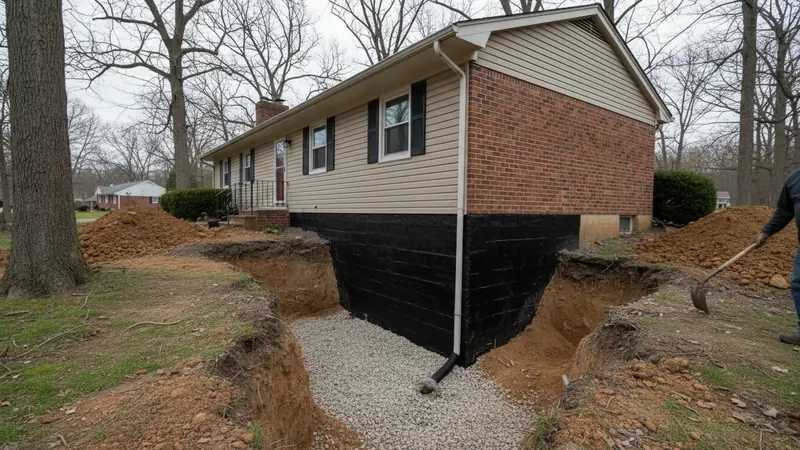
Howard County's residential plumbing checklist says sump water must reach a splash block or another approved point. The ground must slope so water runs away. Ask for the quote to show where the water ends up. That includes where any existing buried pipe goes. A pipe disappearing through the wall does not tell you whether the route works.
The county's Flood Mitigation Plan warns about sump pumps connected to sanitary sewer service. Those connections can leave buildings vulnerable when heavy rain overloads the sewer. If nobody knows where your pipe ends, ask the plumber to trace it before you agree to reuse it. The plan gives you a reason to check. It does not approve a particular connection for your property.
Ask the contractor to sketch the proposed outlet. Ask how water will leave that spot without flowing back towards the foundation. If the job changes your garden or extends buried piping, agree who does that work. Settle who handles the county review described on the county page, too. When the plumber shows you the finished system moving water, include the outside route in that check.
Source: Howard County DILP, Inspection Requirements—Residential Plumbing, Final, undated checklist, no effective date stated; Howard County Department of Public Works, Bureau of Environmental Services, Flood Mitigation Plan—Sewer Backup Protection, county-hosted plan, no effective date identified. Gathered 2026-09-23.
Restore the sump cover and any radon seal
Before anyone opens the basin, point out any radon pipe, labels, or sealed cover. Howard County's residential building checklist checks that sump access is sealed. It also lists a sealed sump cover as a possible route for the radon system. So ask about the cover even if you only need a broken pump replaced.
EPA says an open sump can let radon in. It describes a removable, airtight cover that still lets someone service the pump. Ask how the installer will seal around the new discharge pipe and cords. Ask how someone will open the cover for future repairs.
If a radon system connects to your sump, have the quote name who will restore the seal. Ask who will handle any changes to that system. A running pump shows you that it moves water. It does not prove the radon system still works as intended. Keep the cover and pipe details with your pump records. That saves guesswork at the next repair.
Source: Howard County DILP, Inspection Requirements—Residential Building, Slabs and Final, undated checklist, no effective date stated; U.S. EPA, Building Radon Out: A Step-by-Step Guide on How to Build Radon-Resistant Homes, technical guidance on sump covers, no regulatory effective date. Gathered 2026-09-23.
Specify what happens when power fails
FEMA's National Flood Insurance Program recommends a water alarm for basement flood protection. It also recommends a battery-operated backup pump. Ask for these as separate items in your quote. What alerts you? What pumps water during a power cut? How will the installer show you that each works?
Have the contractor name the backup equipment. Ask them to explain its limits for your basement. If the quote promises a runtime, ask which battery that assumes. Ask about the pumping conditions behind that promise. Request the manufacturer's supporting documents. We could not find a Howard County primary-source figure for a universal backup runtime or pump replacement age.
Before handover, ask to see the main pump, backup, and alarm working. The demonstration should follow the equipment instructions. Keep the manuals, warranty terms, and instructions for checking the battery and clearing debris. Ask who services the system. Check which routine checks you need to do to keep the warranty valid.
Source: FEMA, National Flood Insurance Program, Minimize Flood Damage, undated homeowner guidance, no regulatory effective date. Gathered 2026-09-23.
Compare the complete price before signing
We could not find a county-specific installed price from a primary source for sump pump installation or replacement. The county page explains Howard County's permit fee schedule. Those charges cannot tell you what a contractor should charge for your job.
Compare what each written quote covers alongside the price. Look for the pump and switch, basin work, discharge pipe and check valve, backup equipment, and electrical work. Check for floor repairs and any work outside, too. Have the contractor mark what is included. Ask them to spell out what is excluded. Does an urgent visit cover only temporary pumping or the permanent repair too?
Maryland's home-improvement contract guidance requires covered contracts to describe the work and materials. They must also give approximate start and substantial-completion dates. For your job, ask the agreement to name who finishes the outlet. Have it name who restores the cover. Ask who will show you the equipment working. Read the warranty to find out what happens if something fails. Who supplies a failed part? Who pays to remove and replace it? Is any resulting damage covered? Settle those questions before you sign.
Source: Howard County DILP, FY27 Plumbing Permit Fee Schedule, effective 2026-07-01; Maryland Department of Labor, MHIC, Maryland Home Improvement Contracts, undated current guidance, no effective date stated. Gathered 2026-09-23.